Great! You will be surprised...
Tuesday, May 28, 2013

Wednesday, May 15, 2013
CRISP Ethical world vision
The Environmental Sciences and Policy Department of CEU and the CRISP
(CReating Innovative Sustainability Pathways, www.crisp-futures.com)
team proudly present three visions on sustainable lifestyles in 2030.
The three distinctive visions have been developed by youngsters in the
age of 15-19, from six Europen countries (UK, Norway, the Netherlands,
Greece, Lithuania and Hungary) by sharing their ideas about sustainable
lifestyles and a sustainable society in 2030.
Thursday, April 11, 2013
Hello everyone!
Here you can watch the story of the bottled water.
The animation is like the story of stuff. I think it's really useful and interesting to know theese things abaut the bottled water: Did you know that to product 1 liter bottled water you use one liter water (for the water in the bottle) and two liter to make the bottle?
It's a fact, that in the USA the people buy 500 million bottled water every week. But why they do it? If you watch this video, you will know it. :)
Orsi
Thursday, March 7, 2013
Shake! Fold!
You use paper towels to dry your hands everytime you're in a public toilet, but chances are, you're doing it wrong. In this enlightening and funny short talk, Joe Smith reveals the trick to perfect paper towel technique: http://www.ted.com/talks/joe_smith_how_to_use_a_paper_towel.html

Wednesday, March 6, 2013
The Matrix(off topic)
Have you seen the movie Matrix? What do you think about it? A great film? Well, let me tell something to you. It has a message. I am sure you thought about what the "Matrix" is. I'll give you a hint(tipp). The Matrix is an existing thing, but not in the way ypu can see it in the film. The Matrix in real world is about consumption and shopping to manipulate people. It's focused on scaring you to be a brainwashed "animal" to just work, consume, and sleep. In the video below, you will see an exploit of people fighting against the Matrix.
Monday, March 4, 2013
City and Food
TED - ideas worth sharing - City and Food
Food is a shared necessity - but also a shared way of thinking, argues Carolyn Steel. Looking at food networks offers an unusual and illuminating way to explore how cities evolved.
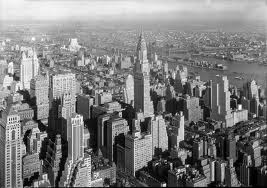
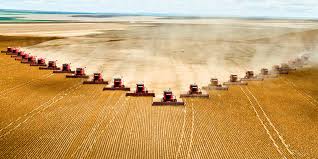
The question of how to feed cities may be one of the biggest contemporary questions, yet it's never asked: we take for granted that if we walk into a store or a restaurant, food will be there, magically coming from somewhere. Yet, think of it this way: just in London, every single day, 30 million meals must be provided. Without a reliable food supply, even the most modern city would collapse quickly. And most people today eat food of whose provenance they are unaware.

More about Carolyn Steel.
Food is a shared necessity - but also a shared way of thinking, argues Carolyn Steel. Looking at food networks offers an unusual and illuminating way to explore how cities evolved.

The question of how to feed cities may be one of the biggest contemporary questions, yet it's never asked: we take for granted that if we walk into a store or a restaurant, food will be there, magically coming from somewhere. Yet, think of it this way: just in London, every single day, 30 million meals must be provided. Without a reliable food supply, even the most modern city would collapse quickly. And most people today eat food of whose provenance they are unaware.
More about Carolyn Steel.
Sunday, February 17, 2013
Watch this video on youtube:
http://www.youtube.com/watch?v=aMfSGt6rHos&list=WL995EAB093C5D3A1E
The film, by film-maker Johnny Kelly, depicts the life of a farmer as he slowly turns his family farm into an industrial animal factory before seeing the errors of his ways and opting for a more sustainable future.
The music is the 'The Scientist' from Coldplay.
I loved it and I think the animaton and the music are so cool.
By: Orsi
http://www.youtube.com/watch?v=aMfSGt6rHos&list=WL995EAB093C5D3A1E
The film, by film-maker Johnny Kelly, depicts the life of a farmer as he slowly turns his family farm into an industrial animal factory before seeing the errors of his ways and opting for a more sustainable future.
The music is the 'The Scientist' from Coldplay.
I loved it and I think the animaton and the music are so cool.
By: Orsi
Wednesday, January 30, 2013
The Greenhouse Effect
The greenhouse effect is something, what is caused by several gases called Greenhouse gases. The main type of gas is carbon dioxide. There is a lot of water vapor(hidrogen dioxide) and nitrous dioxide in the atmosphere too.


The picture is explaining the Green House effect in detail. The main thing what is going on, is that we produce greenhouse gas in factories and also generate it with cars, and so on. This gas traps the solar energy inside the atmosphere, raising the temperature significantly. Since the beginning of the Industrial Revolution, the burning of fossil fuels has contributed to a 40% increase in the concentration of carbon dioxide in the atmosphere from 280 ppm to 397 ppm. Here is a % amount of contribution to the greenhouse effect by various gases.
| Gas | Formula | Contribution (%) |
|---|---|---|
| Water vapor | H2O | 36 – 72% |
| Carbon dioxide | CO2 | 9 – 26% |
| Methane | CH4 | 4 – 9% |
| Ozone | O3 | 3 – 7% |
Heres another picture of how the greenhouse effect works:
.png/711px-Diagram_showing_a_simplified_representation_of_the_Earth's_annual_carbon_cycle_(US_DOE).png)
So it's possible, that in several years, the time it takes for greenhouse gases to leave the atmosphere, will increase significantly, and therefore the temeperature too.
Sunday, January 20, 2013
The true cost of food
We are going to talk about food and the true cost of food soon...
THE PROBLEMS WE'RE FACING
Food consumption is an area where individual decisions can make a difference; supply will follow demand and it's already happening. But first we need to look at the current landscape: The way food is produced and the way we eat create huge costs that are not reflected in our food bills.
Some are actual dollar amounts (subsidies and cleanup costs that we pay for in taxes);
some are damage to the environment (pollution and loss of wildlife habitat);
some are loss of quality of life (tasteless food, loss of the pleasure of preparing food and eating together); and
some are health issues (obesity, diseases, poor nutrition, contaminated food).
Agribusiness farms employ chemical-intensive systems that pollute land, air, and water. We transport much of our food from centralized factory farms instead of buying it from local sources which is a poor use of resources and a contributor to air and water pollution. We're losing our wild places because of wasteful agricultural practices such as uncontrolled grazing and fattening up animals with diets of factory-farm corn. Americans get much of their meat from pollution-causing factory farms and feedlots. More and more of our food production is controlled by a few large producers. Buying from small, independent producers allows us some input into how our food is grown.
Let us find the key words for this topic... demand, landscape, subsidies, pollution, fuel, free range, obesity, industrial farming etc.
This is a very useful site for ESL learners and teachers, with Global Issues and Activism in English Language Teaching
Gabi
THE PROBLEMS WE'RE FACING
Food consumption is an area where individual decisions can make a difference; supply will follow demand and it's already happening. But first we need to look at the current landscape: The way food is produced and the way we eat create huge costs that are not reflected in our food bills.
Some are actual dollar amounts (subsidies and cleanup costs that we pay for in taxes);
some are damage to the environment (pollution and loss of wildlife habitat);
some are loss of quality of life (tasteless food, loss of the pleasure of preparing food and eating together); and
some are health issues (obesity, diseases, poor nutrition, contaminated food).
Agribusiness farms employ chemical-intensive systems that pollute land, air, and water. We transport much of our food from centralized factory farms instead of buying it from local sources which is a poor use of resources and a contributor to air and water pollution. We're losing our wild places because of wasteful agricultural practices such as uncontrolled grazing and fattening up animals with diets of factory-farm corn. Americans get much of their meat from pollution-causing factory farms and feedlots. More and more of our food production is controlled by a few large producers. Buying from small, independent producers allows us some input into how our food is grown.
Let us find the key words for this topic... demand, landscape, subsidies, pollution, fuel, free range, obesity, industrial farming etc.
This is a very useful site for ESL learners and teachers, with Global Issues and Activism in English Language Teaching
Gabi
Wednesday, January 16, 2013
Carbon footprint
A carbon footprint is an estimate of the climate change impact of activity – such as making a product, living a lifestyle or running a company.
Typically, a carbon footprint is calculated by estimating not just the CO2 emissions that the activity in question causes, but also any emissions of other greenhouse gases (such as methane and nitrous oxide) and in some cases other types of climate impacts as well, such as vapour trails from aeroplanes. For simplicity, all these impacts are added together and expressed as a single number in terms of carbon dioxide equivalent (CO2e): the amount of CO2 that would create the same amount of warming.
Here you can calcuate your carbon footprint: http://www.carbonfootprint.com/calculator.aspx
(Hungarian average carbon footprint is 3.1 ha. In Etopia it is 0.5, in the USA 10.3 ha.)
Typically, a carbon footprint is calculated by estimating not just the CO2 emissions that the activity in question causes, but also any emissions of other greenhouse gases (such as methane and nitrous oxide) and in some cases other types of climate impacts as well, such as vapour trails from aeroplanes. For simplicity, all these impacts are added together and expressed as a single number in terms of carbon dioxide equivalent (CO2e): the amount of CO2 that would create the same amount of warming.
Here you can calcuate your carbon footprint: http://www.carbonfootprint.com/calculator.aspx
(Hungarian average carbon footprint is 3.1 ha. In Etopia it is 0.5, in the USA 10.3 ha.)
Tuesday, January 15, 2013
Green Cities
According to grist.org, the eco friendliest city on Earth is Reykjavik, it has been putting hydrogen buses on its streets, and, like the rest of the country, its heat and electricity come entirely from renewable geothermal and hydropower sources and it’s determined to become fossil-fuel-free by 2050.
The second one is Portland, it is the first U.S. city to enact a comprehensive plan to reduce CO2 emissions and has aggressively pushed green building initiatives. It also runs a comprehensive system of light rail, buses, and bike lanes to help keep cars off the roads, and it boasts 92,000 acres of green space and more than 74 miles of hiking, running, and biking trails.
The third is Curitiba. About three-quarters of its residents rely on public transport, and the city boasts over 580 square feet of green space per inhabitant.
The fourth is Malmö, known for its extensive parks and green space, Sweden’s third-largest city is a model of sustainable urban development.
The fifth one is Vancouver, it has been a leader in hydroelectric power and is now charting a course to use wind, solar, wave, and tidal energy to significantly reduce fossil-fuel use.
And the list goes on with London, San Francisco, Bahía de Caráquez, Sydney, Barcelona, Bogotá, Bangkok, Kampala, Austin, Chicago, Freiburg, Seattle and Quebec City.
To read the article click on the following link: http://grist.org/article/cities3/
The second one is Portland, it is the first U.S. city to enact a comprehensive plan to reduce CO2 emissions and has aggressively pushed green building initiatives. It also runs a comprehensive system of light rail, buses, and bike lanes to help keep cars off the roads, and it boasts 92,000 acres of green space and more than 74 miles of hiking, running, and biking trails.
The third is Curitiba. About three-quarters of its residents rely on public transport, and the city boasts over 580 square feet of green space per inhabitant.
The fourth is Malmö, known for its extensive parks and green space, Sweden’s third-largest city is a model of sustainable urban development.
The fifth one is Vancouver, it has been a leader in hydroelectric power and is now charting a course to use wind, solar, wave, and tidal energy to significantly reduce fossil-fuel use.
And the list goes on with London, San Francisco, Bahía de Caráquez, Sydney, Barcelona, Bogotá, Bangkok, Kampala, Austin, Chicago, Freiburg, Seattle and Quebec City.
To read the article click on the following link: http://grist.org/article/cities3/
Thursday, January 3, 2013
How to transport 35 people
This experiment made in Denver is called “How to transport 35 people” and is useful to understand cars are not the best urban transportation system. It has been calculated only 1,2 passengers travel in average in each car. In the first picture 35 people travel in 35 different cars, getting stuck in a traffic jam.
In the second picture the drivers are without the cars, surrounded by the space previously occupied by their vehicles. It makes really clear how much city surface can be taken by cars .
In the third picture the 35 drivers take seat in an imaginary bus and the traffic jam magically disappears. .
In the last picture the 35 car drivers are still in the bus, but now more cars, bikes, motorbikes and pedestrians pop up in the street. You have now more than 50 people in the street, but the traffic is still really fluid.


BBC short videos about recycling
In this BBC page you can watch 4 short videos (around 2 minutes each) about the garbage collecting system
in some cities from Italy, USA, Belgium and South Korea.
It's important to understand how it will change in a near future. More and more countries are adopting the "pay-as-you-throw systems", something unbelievable in Hungary, where you can decide whether to recycle or not without any economic consequence. The "pay-as-you-throw systems" calculate directly your garbage fee according to the amount of not recycled-not recyclable rubbish you produce.
These systems can motivate people to recycle as much as possible: less waste you produce, less money you pay.
http://news.bbc.co.uk/2/hi/7746001.stm
Water foot print calculator
The ecological footprint is a measure of human impact and demand for natural resources. Buying lot of stuff, not recycling, etc., makes our ecological footprint bigger.
But what about water consumption? There's a proper measure for it, the water footprint. Sometimes we aren't aware of our water consumption, for example nobody knows in a year we flush in the toilet as much water as we drink in 40 years.
Generally we think our water consumption is limited to the amount of showers we have: it's good to save water when we are in the bathroom (remember to close the tap whenever you brush your teeth), but let's not forget we need water to grow food and to produce all the items present in our life: to produce a car we need as much water as 50 times its weight.
Our diet and our daily habits influence our water foot print, calculate yours and discover what you could do to reduce it.
Water foot print calculator
Friday, November 30, 2012
Composting and Recycling
Hi!
I've found a lot of tissues in the trash bin at school. Don't you think it's place is in the paper bin? I think so... So I want to ask the all the sicks (and those who also put paper in the trash) to use the paper bin!
But why do we have to recycle paper?
Some statistics on paper consumption:
Watch a video about paper recycling: Following the paper trial
Read more about the issue: at Wikipedia
Please, recycle!
THX
I've found a lot of tissues in the trash bin at school. Don't you think it's place is in the paper bin? I think so... So I want to ask the all the sicks (and those who also put paper in the trash) to use the paper bin!
But why do we have to recycle paper?
Some statistics on paper consumption:
- Recycling 1 short ton (0.91 t) of paper saves 17 mature trees, 7 thousand US gallons (26 m3) of water, 3 cubic yards (2.3 m3) of landfill space, 2 barrels of oil (84 US gal or 320 l), and 4,100 kilowatt-hours (15 GJ) of electricity – enough energy to power the average American home for six months.
- Although paper is traditionally identified with reading and writing, communications has now been replaced by packaging as the single largest category of paper use at 41% of all paper used.
- 115 billion sheets of paper are used annually for personal computers.
- The average web user prints 28 pages daily.
- Most corrugated fiberboard boxes have over 25% recycled fibers. Some are 100% recycled fiber.
Watch a video about paper recycling: Following the paper trial
Read more about the issue: at Wikipedia
Please, recycle!
THX
Sunday, November 25, 2012
I will be a hummingbird
Remember this inspiring African story about the small hummingbird? The woman telling the story is Wangari Maathai, a Kenyan political and environmental activist, Peace Nobel Prize in 2004.
Here you can also find the video with Hungarian subtitles (you should activate them first): http://www.youtube.com/watch?v=xpfRDCJQeO8
Saturday, November 17, 2012
What's development

"A developed country is not a place where the poors have cars, it's where the rich uses public transportation"
Few weeks ago we talked about the difference between economic growth and development. Economic growth doesn't necessarily mean people's quality of life will improve. For example China is becoming a big economic power, but democracy there is still weak and chinese don't have the right to say openly what they think. They're getting rich in material things, but they're poor in democracy.
On the contrary there can be poorer countries caring much more of the environment, of citizens' healthcare and education, and last but not least of their opinion. Where would you prefer to live?
The Mayor of Bogotà, a big city in South America, explains the concept with an effective example: development is rather shown by an efficient public transportation that reduces car traffic and makes our cities more livable, than by a big amount of expensive cars in the roads.
Of course a country can be rich and developed at the same time. That's still the best.
Garbage warrior, Hulladék Harcos
Remember when we've talked about our houses, whether they're ecological or not? We've collected some ideas could be useful to improve their sustainability: collect rain-water, grow herbs and vegetables in the balcony or in the courtyard, install solar panels, etc. In the meanwhile new types of experimental houses are being designed. The Earthship proves is possible to build houses totally self-dependent in heating, sanitation and electricity. They are built with recycled materials like beer cans and tires and are designed to waste natural resources as little as possible. This documentary in English with Hungarian subtitles tells the story of Michael Reynolds, the architect who invented these experimental houses. At first sight Mike Reynolds seems a little crazy, but remember advances in any field are always built upon people with a singular or really personal point of view.
Who knows, maybe in the future everybody will live in houses like that!
Tuesday, November 13, 2012
Animation Az ember aki fákat ültetett
The Man Who Planted Trees (Az ember aki fákat ültetett) is an allegorical tale by the French writer Jean Giono.
It tells the story of the shepherd Elzevier Bouffier's long and successful effort to reforest a desolate valley in the foothills of the Alps in Provence. Over four decades, Bouffier continues to plant trees, until the valley is turned into a beautiful valley vibrant with life.
Somebody said: "When you cut the flow of nature into people's lives, their spirit dies", and this story shows how a healthy and happy nature makes human communities more livable.
Elzevier Bouffier is a fictional character, however there are some real-life people who have dedicated their life to the same project. Wangari Maathai, awarded in 2004 with the Nobel Peace Prize, founded the Green Belt Movement which planted over 47 million trees to restore the Kenyan environment and alleviate global warming. While an organization called Trees for the Future has assisted more than 170,000 families, in 6,800 villages of Asia, Africa, and the Americas, to plant over 35 million trees. Many people inspired by the tale have decided to plant a tree. Finally, everybody can be Elzevier Bouffier!
Monday, November 12, 2012
The story of stuff
This is the first video I've asked you to watch.
Annie Leonard, an important environmental activist explains with the help of some animations how the actual economic system is trashing the planet, our communities and our health.
You can watch the version with Hungarian subtitles here:
You can get more info in the official website: http://www.storyofstuff.org/, there you can also find the english version with english subtitles.
Annie Leonard, an important environmental activist explains with the help of some animations how the actual economic system is trashing the planet, our communities and our health.
You can watch the version with Hungarian subtitles here:
You can get more info in the official website: http://www.storyofstuff.org/, there you can also find the english version with english subtitles.
Subscribe to:
Posts (Atom)